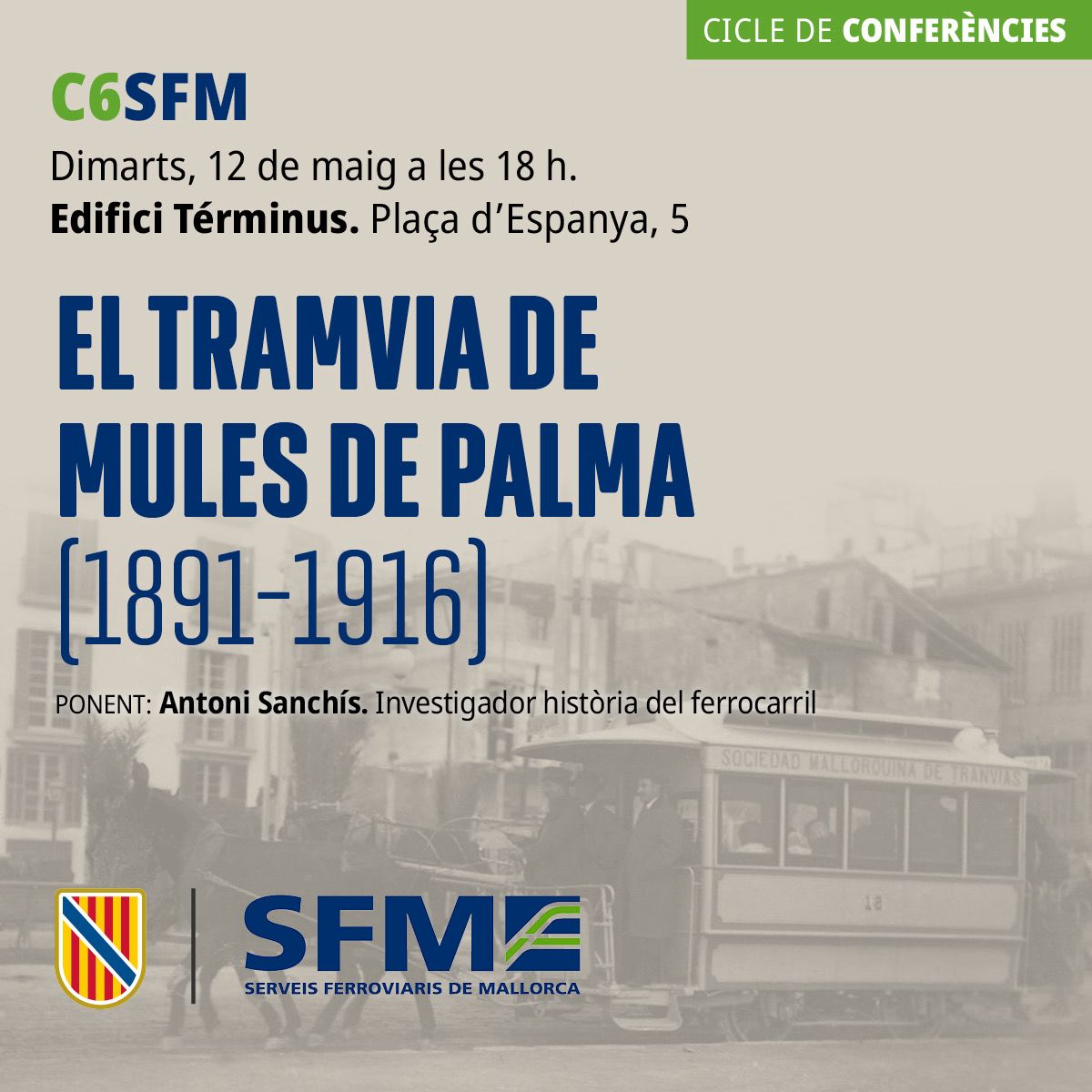
Palma’s Mule Tram Takes Centre Stage in SFM’s New Lecture Series Session This Tuesday at the Términus Building
Researcher Antoni Sanchís’ talk explores the origins of the city’s first collective rail transport system
Serveis Ferroviaris de Mallorca (SFM) will hold a new session of its lecture series tomorrow, Tuesday 12 May, at the Términus building, focusing on the history of Palma’s first interurban collective rail transport system: the mule tram.
The lecture, entitled “Palma’s Mule Tram (1891–1916)”, will be delivered by researcher Antoni Sanchís at 6.00 p.m. at the Términus building. Admission is free until full capacity is reached.
The session will offer an overview of the origins and operation of this means of transport, also known as the horse-drawn tram, which at the end of the 19th century connected Plaça d’en Coll with the church of Sant Nicolau de Porto Pi. Through this historical perspective, the talk will examine the role the tram played in a rapidly transforming Palma that was beginning to embrace new forms of mobility linked to modernity.
The lecture will also explore the more everyday dimension of the service, including references to passengers’ experiences and various anecdotes that help illustrate urban life at the time.
The content of the presentation is based on the research published in the book Palma’s Mule Tram. The Mallorcan Tramway Company (1891–1916), released by Documenta Balear, in which Sanchís reconstructs the history of the system and provides an insight into Palma’s urban and social evolution between the late 19th and early 20th centuries.
Antoni Sanchís is a researcher specialising in railway history and one of the driving forces behind the Museu del Ferrocarril de Mallorca. He has taken part in several initiatives aimed at recovering and preserving the island’s railway heritage and is the author of publications focused on the history of rail transport.
Through this lecture series, SFM continues to strengthen its commitment to promoting railway heritage and its connection with society, highlighting the role rail transport has played in shaping the territory and in the everyday lives of citizens.